Custom arrangements
Understated reception pieces or dramatic installations tailored to your environment.
Request a quote


At Flora Clay, we've been growing orchids in our San Diego greenhouse since 2001. Over two decades and tens of thousands of orchids, we've learned what keeps these plants thriving and what causes them to struggle. This guide distills everything we know about orchid care into a single, practical reference. Whether you just brought home your first Phalaenopsis or you're trying to coax a stubborn plant into reblooming, you'll find what you need here.
Because we grow our orchids locally rather than shipping them across the country, our plants arrive stronger and better acclimated to Southern California conditions. That head start matters and the care advice in this guide reflects real experience with orchids grown and maintained in the LA climate.


Overwatering is the single most common reason orchids decline. Orchids store moisture in their roots and pseudobulbs, so they need time to dry out between waterings. In Los Angeles, where indoor environments tend to run warm and dry, it's tempting to water more frequently but restraint is key.
For most indoor environments, watering once every 7 to 10 days works well. In summer, when temperatures are higher and air conditioning runs constantly, you may need to water slightly more often. In winter, scale back as growth naturally slows. The goal is to let the potting medium approach dryness without letting roots desiccate completely.

Rather than watering on a fixed schedule, check the roots before every watering. This is the single best habit you can develop as an orchid owner. Healthy, well-hydrated roots appear green or silver-gray and feel firm. When they begin to lighten and look wrinkled or papery, it's time to water. If you have a clear nursery pot (which we include with every Flora Clay orchid), you can monitor root health without disturbing the plant.
Take the pot to your sink and run room-temperature water gently through the potting medium for about 30 seconds. Allow all excess water to drain fully before returning the pot to its tray or decorative planter. Never leave your orchid arrangement sitting in standing water this is the fastest route to root rot. Use filtered or room-temperature tap water. Cold water straight from the faucet can shock the roots.
LA Apartment Tip: Air conditioning significantly reduces indoor humidity, which accelerates how quickly orchid bark dries out. During summer, check your orchid more frequently and consider placing a humidity tray filled with pebbles and water beneath the pot. If your orchid sits near an AC vent, move it cold air blasts are one of the top causes of bud drop in LA apartments.

East-Facing Windows - Ideal
East-facing windows receive gentle morning light at the perfect intensity for most orchid varieties. Temperatures remain stable throughout the day. This is the best position for Phalaenopsis (moth orchids), the most popular variety we sell at Flora Clay and the most common orchid in homes across LA.
West-Facing Windows - Very Good
West-facing windows catch strong afternoon light. This works well as long as your orchid is set back slightly from the glass or a sheer curtain diffuses the direct rays. Dendrobiums and Cattleyas, which enjoy higher light levels, do particularly well in west-facing spots.
South-Facing Windows - Use Caution
South-facing windows receive intense, direct sunlight for much of the day. Place your orchid at least 3 to 4 feet from the glass, or use a sheer curtain to filter the light. Yellowing or bleached patches on leaves indicate too much direct sun.
North-Facing Windows - Supplement If Needed
North-facing windows rarely provide sufficient light for orchids to bloom reliably. If this is your only option, supplement with a small LED grow light placed 12 to 18 inches above the plant for 10 to 12 hours per day.
Your orchid's foliage tells you whether it's getting the right amount of light. Dark green, almost olive-colored leaves indicate insufficient light. Bright, medium green leaves with a slight yellow-green tint signal healthy light levels. Yellow or washed-out patches suggest too much direct sun move the plant back or add a sheer curtain.
Most orchids kept in homes are Phalaenopsis, which thrive between 65°F and 80°F a range that aligns naturally with most indoor LA environments. Daytime temperatures of 70°F to 80°F with a slight drop at night are ideal for both growth and blooming.
Never place orchids directly beneath or adjacent to AC vents. Cold blasts of air dry out foliage and roots rapidly and can trigger bud blast (buds dropping before they open). Keep orchids equally distant from heating vents, which create excessively dry heat that stresses the plant. Windowsills can also experience significant temperature swings warm during the day, cooler at night in winter. Monitor conditions near glass during colder months.
Los Angeles has naturally low ambient humidity, and air conditioning reduces it further. Most orchids prefer humidity between 50% and 70%, which is higher than the average LA interior. Simple solutions include placing your pot on a shallow tray filled with pebbles and water (with the base of the pot sitting above the waterline), grouping your orchid with other plants so their collective transpiration raises local humidity, or misting aerial roots lightly in the morning.
LA Apartment Tip: Every Flora Clay orchid arrangement comes in a ceramic planter that helps moderate moisture around the root zone a meaningful upgrade from disposable plastic nursery pots that dry out quickly in LA's low humidity.
Not all orchids need the same care. Here's a quick reference for the varieties we grow most often in our San Diego greenhouse.
| Variety | Light Needs | Watering | Best For | Shop |
|---|---|---|---|---|
| Phalaenopsis (Moth Orchid) | Bright indirect | Every 7–10 days | Beginners, apartments, offices | Browse → |
| Dendrobium | Bright, some direct | Every 5–7 days in summer | Experienced growers, west-facing windows | Browse → |
| Oncidium (Dancing Lady) | Bright indirect to direct | Every 7 days | Colorful displays, fragrance | Browse → |
| Cattleya | Bright with some direct | Every 7–10 days | Fragrance, dramatic blooms | Browse → |
| Mini Phalaenopsis | Moderate indirect | Every 5–7 days | Small spaces, desks, shelves | Browse → |
Orchids need repotting when their growing medium breaks down, when roots begin escaping the pot in significant numbers, or when the plant becomes top-heavy and unstable. For most orchids, this happens every one to two years.
Watch for these indicators: the bark or moss medium has decomposed and no longer provides adequate drainage; roots are growing densely over the rim with no room left inside the pot; the plant wobbles or tips easily when watered; or you notice a musty smell from the potting medium, which suggests decomposition or trapped moisture.
Wait until blooms have dropped and the plant enters its rest phase. Gently remove the orchid from its existing pot, shaking away old potting medium from the roots. Trim any dead, mushy, or hollow roots with sterile scissors healthy roots are firm and white or green. Place the orchid in a new pot one size larger (clear plastic nursery pots are ideal for monitoring root health). Fill around the roots with fresh orchid bark, pressing gently to provide stability without compacting. Do not water for 5 to 7 days after repotting this encourages roots to seek moisture and establish in the new medium.
LA Apartment Tip: Need fresh orchid bark or a new pot? Flora Clay carries orchid care supplies at our San Diego greenhouse, or you can add potting supplies to any delivery order. Call us at 213.627.8880.

This is the most common question we hear from customers: “My orchid finished blooming how do I get flowers again?” The answer almost always comes down to one factor: a temperature differential between day and night.
Phalaenopsis orchids require a drop in nighttime temperature to initiate a new bloom spike. In climate-controlled environments where temperatures stay consistent year-round, this natural signal is absent which is why reblooming can stall without deliberate intervention.
In autumn and early winter, move your orchid near a window overnight where temperatures naturally drop to around 55°F to 60°F. Maintain this cooler night temperature for 4 to 6 weeks while keeping daytime temperatures in the normal 70°F–80°F range. In LA, a covered patio, an unheated room, or positioning near a single-pane window on cooler nights can provide the necessary drop.
Once a new bloom spike emerges typically a green, arching shoot from the base of a leaf move the plant back to its regular position and resume normal care. Avoid rotating the plant once the spike is forming, as orchids orient their growth toward their primary light source. After providing the temperature trigger, expect 3+ weeks before flowers appear. Patience pays off.
Yellow leaves at the base of the plant are normal older leaves naturally yellow and drop as the plant matures. If younger, middle leaves are yellowing, this typically indicates overwatering, too much direct sun, or nutrient deficiencies. Check your watering schedule and light position before adjusting fertilizer.
Soft, wrinkled leaves mean the plant is losing more moisture than it's absorbing. Check the roots: if they appear dry and gray-white, increase watering frequency slightly. If roots appear brown and mushy, root rot has set in and the plant needs immediate repotting (see repotting section above).
In LA homes, bud blast is most commonly caused by cold air from AC vents, sudden temperature changes, low humidity, or exposure to ethylene gas from nearby ripening fruit. Relocate the plant away from air vents and fruit bowls, and maintain stable conditions until blooming is complete.
Soft, brown, hollow roots signal root rot from overwatering or poor drainage. Repot immediately, trimming all damaged roots. After repotting, wait a full week before watering and ensure the pot has adequate drainage holes.
If your orchid hasn't produced new leaves or roots in several months, assess its light, temperature, and feeding schedule. Ensure it's receiving bright indirect light, temperatures are within range, and you're fertilizing every two weeks during the active growing season (spring and summer in LA).
Still stumped? Our team at Flora Clay has been diagnosing orchid problems for over 20 years. Call us at 213.627.8880 or text a photo of your orchid and we'll help you figure out what's going on.
Enter your email to get the free Orchid Care PDF:
Got Questions?
Frequently Asked Questions
Every Flora Clay orchid is greenhouse-grown in our San Diego greenhouse not mass-shipped from out of state. We hand-select each plant, arrange it in a signature ceramic planter, and deliver it by hand across Los Angeles. From single-spike Phalaenopsis for a desk to dramatic multi-spike displays for a living room or lobby, every arrangement reflects 20+ years of orchid expertise.
Browse our full collection: floraclay.com/collections/orchid-arrangements | Same-day delivery: Available across LA via DoorDash for qualifying orders | Call or text: 213.627.8880
Related pages: Orchid Delivery in Los Angeles → /pages/orchid-delivery-los-angeles | Orchid Delivery Beverly Hills → /pages/orchid-delivery-beverly-hills | Corporate Orchid Service → /pages/corporate-orchid-service | Contact Flora Clay → /pages/contact
Orchids for your business
Custom orchid arrangements, recurring service and meaningful corporate gifts for businesses throughout Los Angeles.
Flora Clay Corporate
Your space speaks before a word is said. We create distinctive orchid arrangements for reception areas, offices, hotels, restaurants, salons, showrooms and client-facing spaces.
Every piece is designed in-house with premium orchids and carefully selected pottery to complement your interior, scale and service needs.
Designed around your business
From one statement arrangement to an ongoing program across multiple locations, our Los Angeles team makes it effortless to keep your space polished.
Understated reception pieces or dramatic installations tailored to your environment.
Request a quoteScheduled delivery, placement and refreshes—weekly, biweekly, monthly or custom.
Plan a scheduleMemorable orchids for appreciation, milestones, openings, closings and VIP moments.
Plan your giftsVolume and trade pricing for qualified designers, hospitality and industry partners.
Ask about pricing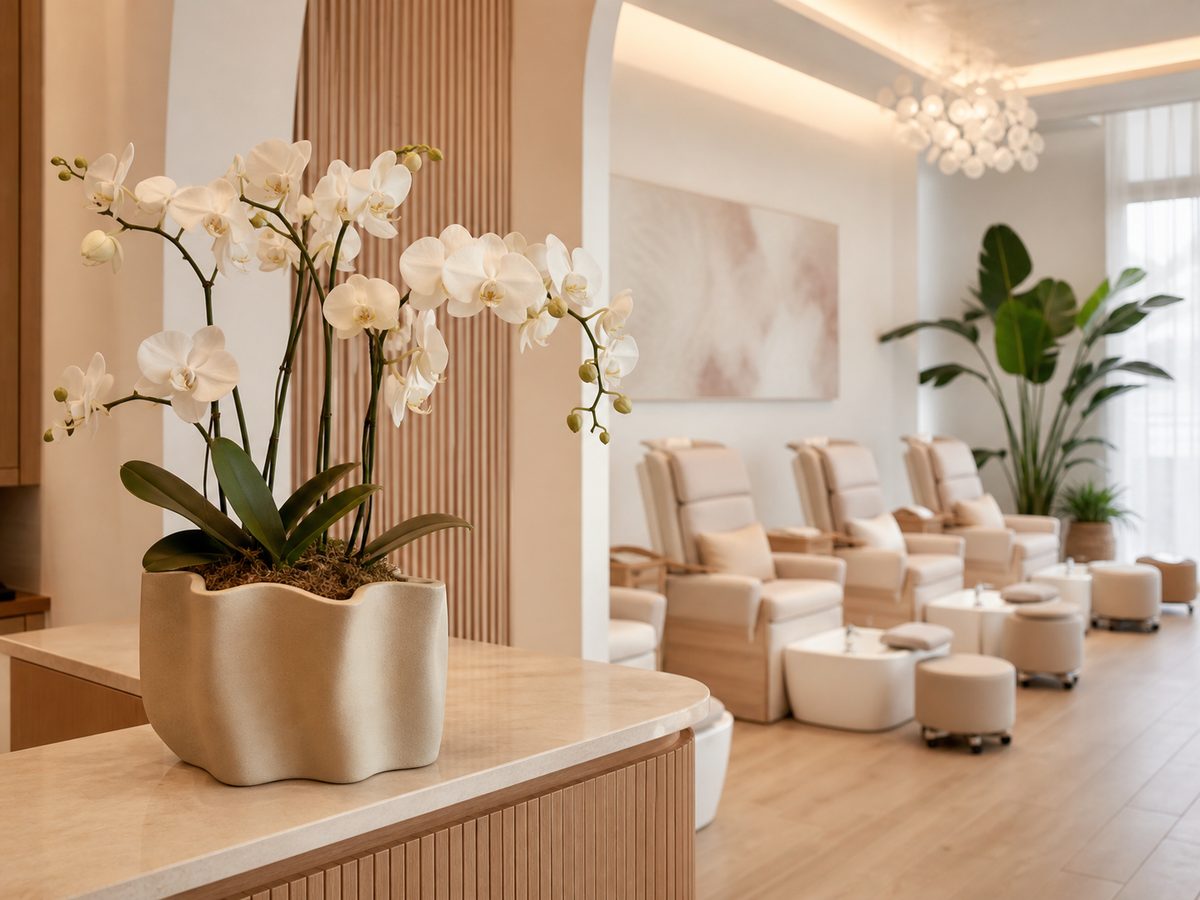


Corporate & client gifting
Send a living gesture with lasting presence. We can coordinate multiple recipients, personalized cards and delivery locations for larger programs.
New corporate customers
Experience Flora Clay corporate service with an introductory offer on your first qualifying order.
Claim your offerTerms and exclusions may apply.Simple by design
Share a photo, dimensions, location and what you have in mind.
We recommend the orchid color, scale and planter for your environment.
Our team coordinates directly with your office, concierge or front desk.
Choose recurring service for effortless, consistently beautiful spaces.
Let’s grow something beautiful
Whether you need one statement piece, a recurring program, client gifts or service across several locations, tell us what you’re looking for.
(213) 627-8880
info@floraclay.com
766 San Julian St., Los Angeles, CA 90014